

State of the Occupation Report 2026
The fourth Platform Report, released for the 59th year of the occupation, is presented by 22 Israeli human rights organizations that operate, document, and conduct research in Israel and in the occupied territories, out of the conviction that human rights are universal and that they are being systemically violated by the policies of the occupation.
As the occupation enters its 60th year, this report summarizes a difficult, violent year, during which the Israeli government has continued to aggressively advance policies of forced displacement and annexation, while violating the human rights of Palestinians living in the Gaza Strip, the West Bank, and East Jerusalem and breaching its obligations under international law. At the same time, within Israel, the systemic retreat from the principles of the rule of law continues, alongside a persistent erosion of the democratic space.
Despite the profound impact of the occupation on both Israeli and Palestinian society, the issue is entirely absent from the discourse surrounding the upcoming elections. The information presented in this report is difficult to read, yet we, as citizens of Israel, have a duty to bring the full reality of the situation to the attention of the broader public. We hope that this report will serve as a tool to deepen public debate and strengthen demands for change, including in the lead‑up to the elections.
In preparing this report, every effort was made to compile, verify, and cross‑check information and to provide references to sources. To the best of our knowledge, the information contained in this report is accurate and reliable. Any errors are unintentional.
59 Years of Occupation


The information presented in this report has been rigorously collected, verified, and cross-referenced through sustained efforts. It is difficult to read and absorb. Still, we, the signatory organizations, hope you will engage with it and join us in calling for action and for the redress of the injustices it exposes.
Gaza Strip
Overview
Despite the ceasefire agreement that entered into effect in October 2025, Israel has continued to attack population centers and restrict the entry of aid, food, and essential goods. Israel is also systematically destroying buildings and infrastructure in the area that remains under its control, which makes up about 58% of the Strip. Gaza’s roughly two million residents are crowded into less than half of the territory, living in tents without clean drinking water, electricity, or basic healthcare services. More than 18,500 sick and wounded people are waiting to be evacuated for medical treatment outside of Gaza, while medical evacuations remain extremely limited. The humanitarian crisis in Gaza was exacerbated during the war with Iran, and the harsh living conditions are driving the spread of infectious diseases as well as pest and rodent infestations.

Photo by Doaa Albaz, Activestills
Introduction
Israel continues to advance a policy of de facto annexation of the West Bank through settlement expansion, the transfer of civilian management powers in the West Bank from the military to civilian bodies subordinate to elected politicians, and seismic changes in the land regime. Settler violence has intensified, at times in cooperation with soldiers, resulting in harm to civilians and the forced displacement of numerous Palestinian communities. Hundreds of checkpoints restrict the freedom of movement of 3.4 million Palestinians in the West Bank, farmers’ access to their land is blocked, and more than 100,000 workers are prevented from working in Israel. These restrictions, together with Israel’s freeze on the transfer of Palestinian Authority funds, are fueling a worsening economic crisis. Although petitions to the High Court of Justice remain a central tool in the struggle against violations, their effectiveness is limited due to protracted proceedings and insufficient judicial intervention.
The West Bank
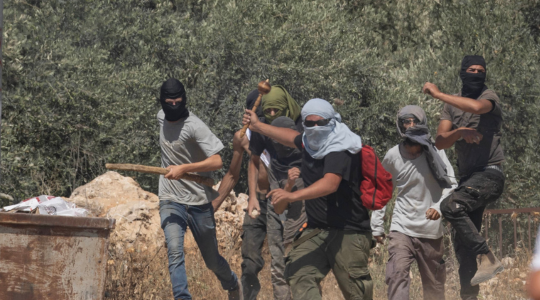
Photo by Oren Ziv Activestills
East Jerusalem
Introduction
The Government of Israel continues to advance a policy aimed at a Jewish takeover of East Jerusalem through the use of a variety of legal and bureaucratic tools. These include the administrative acquisition of land by the State, the seizure of homes and their transfer to settler organizations, and the approval and planning of extensive construction solely for the Jewish public. Additionally, the authorities systematically discriminate against the area’s hundreds of thousands of Palestinian residents, the vast majority of whom are permanent residents or citizens of Israel. This includes freezing almost all planning and construction for the benefit of Palestinian citizens and residents, demolishing homes, and placing hundreds of Palestinian families under threat of eviction. About 60% of Jerusalem’s Palestinian residents live below the poverty line.

Photo by Gili Meisler, ACRI
Introduction
In 2026, more than 9,000 Palestinians, some of whom are minors, were classified as security prisoners, including sentenced prisoners, detainees, administrative detainees, and detainees under the Incarceration of Unlawful Combatants Law. They are subjected to extremely harsh incarceration conditions, violence, degradation, overcrowding, starvation, and neglect, including medical neglect. As a result, inmates have been released from custody with irreversible physical injuries. At least 103 Palestinians, including a 17-year-old boy, died in Israeli custody between October 2023 and March 2026, a record number that attests to the gravity of the situation. In addition, the sweeping ban on family and Red Cross visits remains in place. Despite these conditions, no indictments have been filed against any soldier or prison guard in relation to a death in custody, and there is only one known case in which a soldier was convicted of abusing detainees.
Detention and incarceration
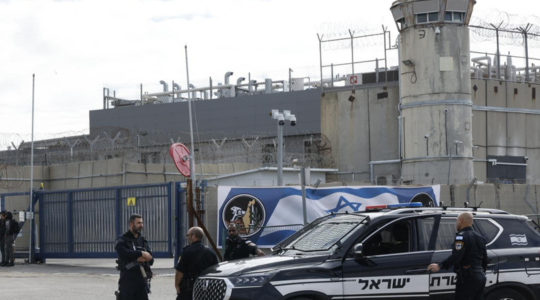
Photo by Yossi Zamir, Shatil-stock
Shrinking democratic space
Introduction
Alongside the brutal occupation policy, inside Israel democratic systems such as the separation of powers, the judiciary, law enforcement, the free press, and civil society are under attack. The adoption of capital punishment, impunity for violence committed against Palestinians in the West Bank, selective enforcement, attempts to constrain Israeli human rights organizations and activists, and the suppression of freedom of expression and protest corrupt democratic principles and erode the space for civil resistance to the occupation.
%20(1)_JPG.jpg)
Photo: "Documenting Protest", Whatsapp


The Partner Organizations


Head writer: Tal Raviv O’Regan
Steering committee: : Alon Arad, Noa Sattath, Efrat Cohen-Bar
Proofreading and online version: Tal Dahan
Arabic translation: Kifah Daghash
Arabic editor: Maram Sliman
Project Manager: Gili Meisler
This report was written by 22 human rights organizations, some of which receive most of their funding from foreign political entities. Even during this period, we are proud of the support of those who believe, as we do, that the occupation is not an internal Israeli matter and who insist on preserving human rights. Lists of supporters are detailed on the websites of the organizations and on the website of the Registrar of Nonprofits.